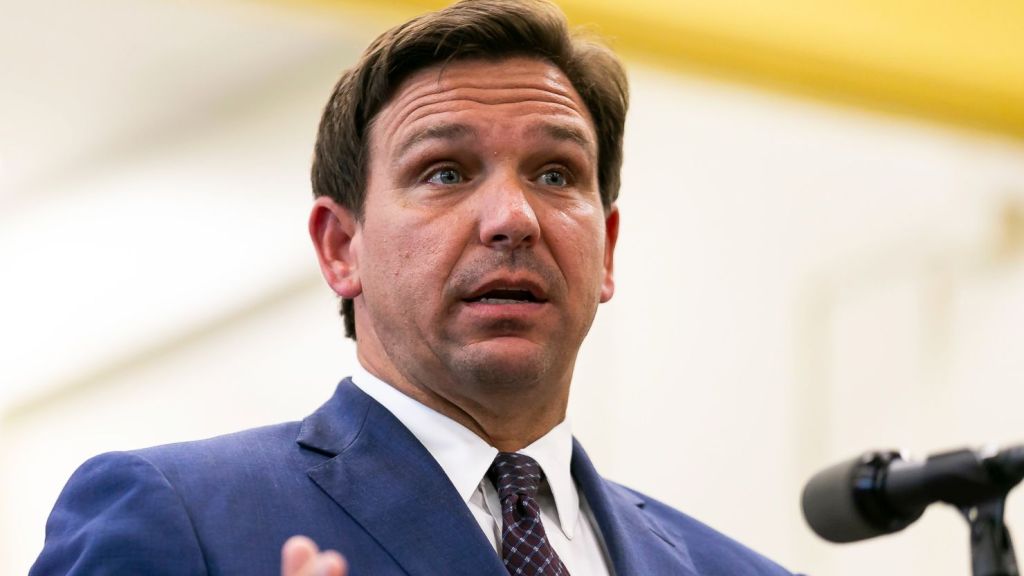
Florida Governor Ron DeSantis has reignited a conversation about eliminating property taxes in the Sunshine State, a move that could reshape the state’s tax structure and funding for local services. In a series of social media posts and public statements over the past month, DeSantis has voiced his backing for the idea, calling property taxes an “oppressive and ineffective form of taxation” and suggesting that relief is needed for homeowners burdened by rising assessments.
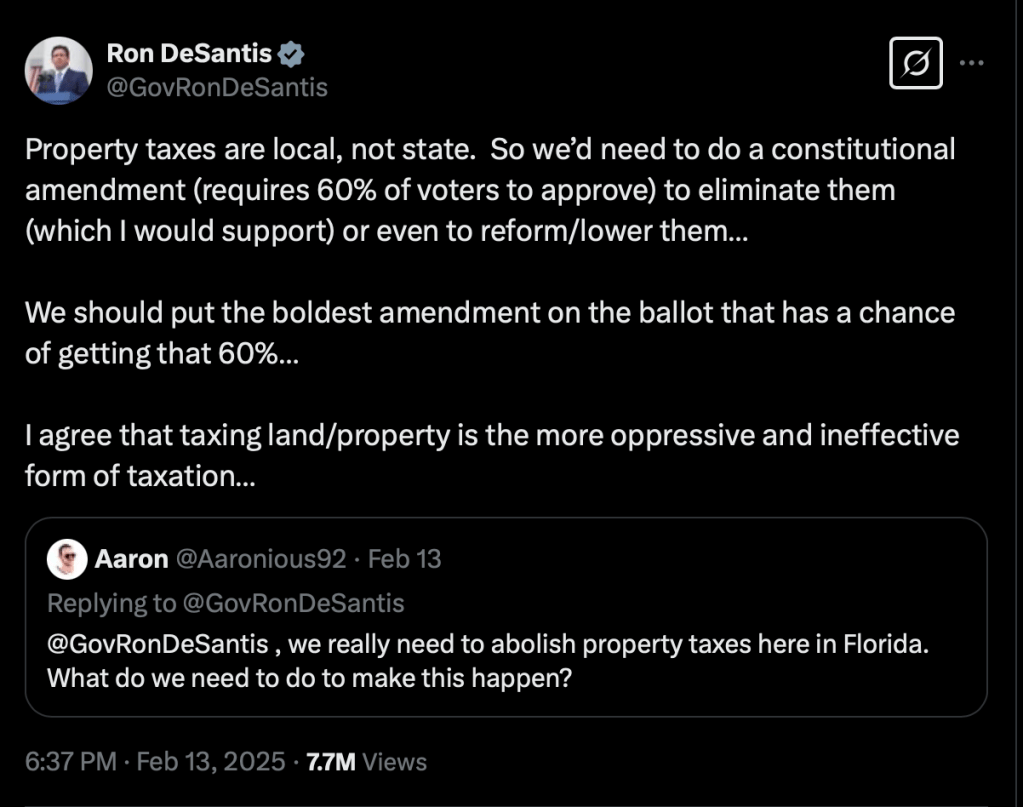
The governor first hinted at the possibility in mid-February on X, responding to a user advocating for the abolition of property taxes. “Property taxes are local, not state. So we’d need to do a constitutional amendment (requires 60% of voters to approve) to eliminate them (which I would support) or even to reform/lower them,” DeSantis wrote on February 13, 2025. He added, “We should put the boldest amendment on the ballot that has a chance of getting that 60%.” The post garnered significant attention, with Eric Trump amplifying it, declaring, “Florida leading the way! This is amazing!”
More recently, at a press conference in Tampa on February 24, DeSantis elaborated, questioning the fairness of property taxes: “You buy a home. You own it outright, free and clear, and yet you have to continue to pony up money to the government just for the courtesy of using your own property.” He argued that the state’s homestead exemption—currently reducing a home’s assessed value by up to $50,000 for tax purposes—doesn’t go far enough to shield residents from escalating tax bills driven by soaring property values.
The idea has taken a step toward reality with Senate Bill 852, filed by State Senator Jonathan Martin (R-Fort Myers) in February 2025. The bill calls for a study by Florida’s Office of Economic and Demographic Research to analyze the feasibility of eliminating property taxes and replacing the revenue with alternatives, such as an increased sales tax. The report would be due by October 1, 2025, though no formal proposal to eliminate the tax has yet been introduced.
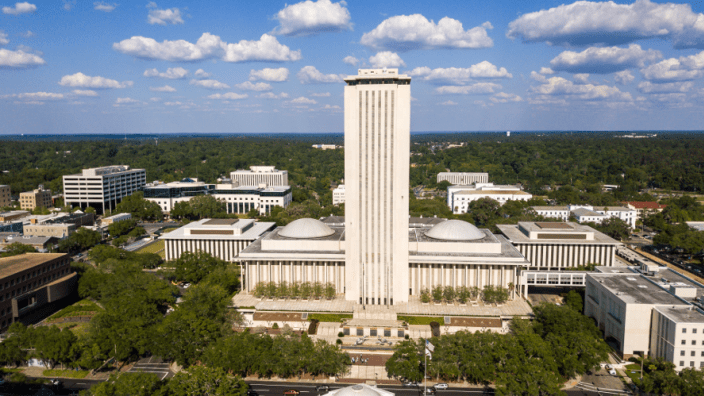
Property taxes are a cornerstone of local government funding in Florida, generating over $40 billion annually to support schools, police, fire departments, and infrastructure. Florida collects no state income tax, making property and sales taxes critical revenue sources. Eliminating property taxes would require a constitutional amendment, needing a three-fifths vote in both legislative chambers to reach the ballot and 60% voter approval to pass—potentially not until the 2026 election.
DeSantis has suggested that government efficiency measures, inspired by Elon Musk’s “Department of Government Efficiency” (DOGE) concept, could offset revenue losses by trimming local budgets. Speaking in Tampa, he proposed a state task force to audit municipal spending, though specifics remain unclear.
With the legislative session underway as of March 4, the property tax debate is poised to intensify. While DeSantis has softened his rhetoric at times—floating options like increasing homestead exemptions or capping assessments—his push for bold reform continues to captivate supporters and critics alike. For now, Floridians await concrete plans, weighing the promise of tax relief against the uncertainties of funding the services they rely on.


 Plant City Insider
Leave a comment